

 Buy now and Pay Later!
 +44 (0) 1543 397 397
 All items in Stock & Ready to Ship
How Serious Airsoft Players Choose Performance-Ready Guns That Dominate Fields
Your stock AEG's pedestrian 15 RPS and 280 FPS performance just cost you another close-quarters engagement—while your opponent's tuned HPA rig delivers laser accuracy and instant trigger response. Sound familiar?
Most airsoft gun buying guides focus on budget and brand recognition, completely ignoring the technical specifications that determine field performance and modification potential. This creates a frustrating gap between what recreational players need and what serious enthusiasts require for competitive advantage.
This performance-focused selection framework reveals how seasoned players evaluate internal components, platform compatibility, and upgrade pathways to dominate competitive play. You'll discover the technical specifications that separate performance airsoft guns from entry-level replicas, understand platform selection strategies based on your playing style and upgrade goals, and learn to evaluate internal components for maximum modification potential.
We'll analyse AEG vs HPA vs GBBR platforms through a technical lens, decode critical internal specifications that affect field performance, and showcase high-performance examples that deliver the competitive edge you're seeking. Whether you're transitioning from recreational play or building your next Milsim loadout, this guide provides the technical foundation for making informed decisions about performance-ready airsoft rifles.
Platform Performance Analysis: AEG vs HPA vs GBBR Technical Breakdown
Understanding the fundamental differences between airsoft AEG, HPA, and GBBR platforms requires analysing their mechanical systems, performance characteristics, and upgrade potential. Each platform offers distinct advantages that align with specific tactical roles and performance requirements.
AEG Platform Advantages and Limitations
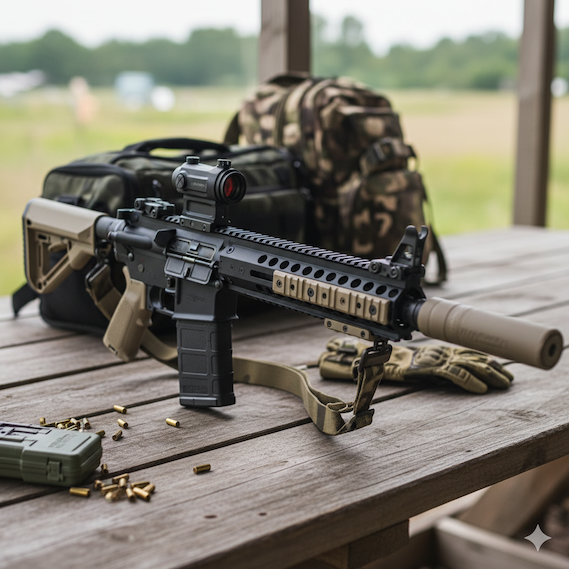
Airsoft AEG systems remain the backbone of competitive play due to their reliability and extensive upgrade ecosystem. The gearbox design provides consistent power delivery whilst offering unlimited modification potential through standardised V2 and V3 shells.
Modern AEG gearboxes utilise reinforced materials like 7075 aluminium or steel for high-stress applications. The gearbox integrity directly impacts your gun's ability to handle upgraded springs and high-speed configurations. Tokyo Marui NGRS models feature their revolutionary recoil system within a robust shell that handles both standard and upgraded internals without compromising reliability.

MOSFET integration has revolutionised AEG trigger response, eliminating the electrical contacts' limitations whilst providing programmable fire modes and active braking. Advanced units like the Perun ETU++ offer precocking functionality, reducing trigger response to under 20 milliseconds—approaching HPA-level performance.
Battery technology significantly affects sustained performance. LiPo batteries deliver consistent voltage under load, maintaining rate of fire throughout extended engagements. However, temperature sensitivity and cycle life require careful management for optimal performance.
Krytac Trident models exemplify optimised AEG design with their rotary hop-up system and quick-change spring capability. The internal components are precisely machined for consistent tolerances, whilst the MOSFET provides instant trigger response and programmable burst fire modes.
The primary limitation remains mechanical complexity. Gear timing, shimming, and compression system maintenance require technical expertise that many players find intimidating. However, this complexity also enables extensive customisation possibilities unavailable in other platforms.
HPA System Performance Benefits
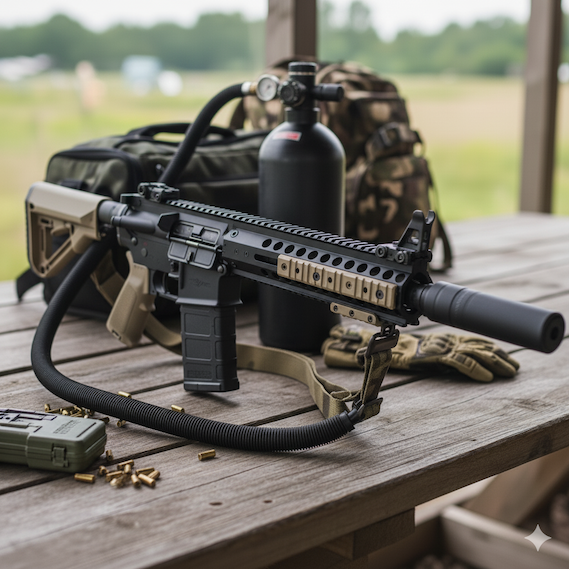
Airsoft HPA systems deliver unmatched consistency and customisation through pneumatic operation. The elimination of mechanical stress points provides superior reliability during sustained fire whilst offering precise pressure regulation for FPS stability.
Trigger response represents HPA's most significant advantage over traditional AEG systems. Electronic firing control achieves near-instantaneous activation, typically under 10 milliseconds from trigger pull to BB release. This responsiveness proves decisive in close-quarters engagements where split-second timing determines outcomes.
Pressure regulation ensures consistent muzzle velocity regardless of environmental conditions. Unlike gas-powered systems, HPA maintains stable FPS across temperature ranges whilst providing adjustable output for different field requirements. Tournament players benefit from precise FPS control for chronograph compliance.
Wolverine Inferno Gen 2 engines showcase advanced HPA technology with their closed-bolt design and programmable firing modes. The system delivers 30+ RPS capability whilst maintaining surgical precision for single-shot accuracy. Installation into quality host rifles like VFC Avalon receivers creates performance platforms capable of dominating competitive fields.
PolarStar systems offer modular upgrade paths with swappable nozzles and trigger boards. This flexibility allows optimisation for specific roles—from high-volume suppressive fire to precision designated marksman applications.
Maintenance requirements remain minimal compared to complex gearbox systems. Regular cleaning and lubrication of moving parts ensures consistent performance without the timing and shimming complexities of mechanical drivetrains.
The primary drawback involves air supply dependency. Tank weight and refill requirements limit mobility compared to battery-powered alternatives, though this trade-off delivers superior consistency and response characteristics.
GBBR Realism vs Performance Trade-offs
Gas blowback rifles provide unmatched realism through authentic cycling action and magazine handling characteristics. The mechanical blowback system delivers genuine felt recoil whilst forcing tactical reload procedures that enhance training value for Milsim applications.
Temperature sensitivity affects GBBR performance more significantly than other platforms. Propane and green gas systems lose efficiency in cold conditions, reducing both FPS and cycling reliability. This limitation requires careful consideration for year-round competitive use.
Magazine capacity constraints mirror real-world limitations, adding tactical complexity through frequent reloads. Thirty-round magazines force ammunition conservation and strategic positioning—elements that enhance realism but may disadvantage players in high-volume engagements.
VFC GBBR models excel in construction quality with their steel bolt carriers and realistic bolt catch mechanisms. The internal components withstand repeated cycling under normal use whilst maintaining tight tolerances for consistent accuracy.
WE Tech platforms offer budget-conscious entry into GBBR systems with acceptable reliability for recreational use. Whilst lacking the refinement of premium options, they provide authentic manual of arms training at reduced cost.
Gas efficiency improvements through valve modifications and precision barrels can extend effective range and shots per magazine. However, these modifications require technical expertise and ongoing maintenance for optimal results.
Critical Internal Component Evaluation Framework
Systematic evaluation of internal components reveals the performance potential and upgrade compatibility that separate professional-grade airsoft guns from recreational replicas. Understanding these technical specifications enables informed decisions about immediate capability and long-term modification potential.
Hop-up System and Barrel Quality Assessment

The hop-up chamber design determines accuracy potential and aftermarket compatibility. Rotary hop-up units provide superior adjustment precision compared to sliding mechanisms, whilst maintaining consistent settings under recoil forces.
Hop-up chamber compatibility with aftermarket buckings directly affects upgrade potential. Standard VSR-style chambers accept the widest range of performance buckings from manufacturers like Prometheus and Maple Leaf. Proprietary designs may limit modification options despite superior stock performance.
Inner barrel bore quality and manufacturing tolerances significantly impact accuracy and range. Precision barrels maintain consistent diameter throughout their length, typically within 0.01mm tolerances. Standard 6.08mm bores provide adequate performance, whilst 6.03mm and 6.01mm options increase velocity at the cost of requiring perfect BB quality.
Barrel length optimisation balances velocity gain with maneuverability requirements. Each additional 50mm of length typically increases FPS by 10-15 units until the optimal length is reached—usually around 400-450mm for standard AEG configurations, according to industry testing data.
Prometheus precision barrels represent the gold standard for accuracy upgrades, featuring mirror-polished surfaces and laser-etched hop-up windows. The manufacturing precision ensures consistent BB contact and predictable trajectory characteristics essential for long-range accuracy.
Crown quality at the barrel's muzzle end affects BB stability during exit. Precision-cut crowns maintain concentric alignment, whilst damaged or poorly finished crowns introduce trajectory inconsistencies that limit effective range.
The hop-up bucking material and durability directly influence consistency over extended use. Silicone compounds resist deformation better than rubber alternatives, maintaining consistent contact pressure throughout thousands of shots.
Gearbox Shell Integrity and Gear Ratios
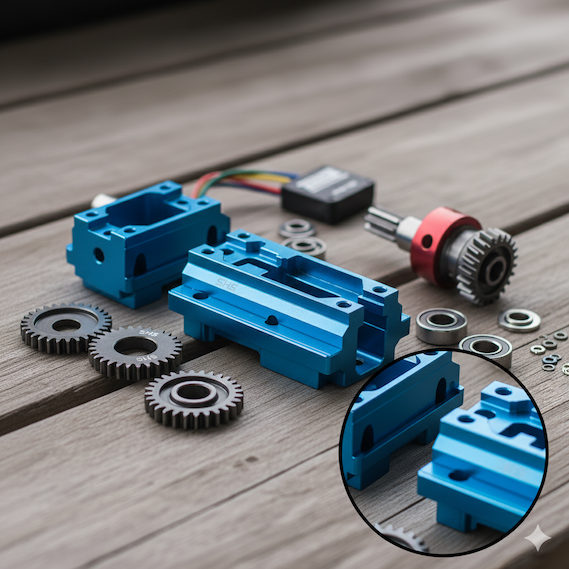
Shell material strength determines the platform's ability to handle upgraded springs and high-stress configurations. Cast aluminium shells provide adequate strength for standard applications, whilst CNC-machined 7075 aluminium offers superior durability for competition builds.
Gear ratios balance rate of fire against torque output for different tactical applications. Standard 18:1 ratios provide balanced performance, whilst 13:1 high-speed configurations prioritise rapid fire at the expense of trigger response. Custom ratio selections optimise performance for specific roles.
Bearing quality and alignment affect power transmission efficiency and longevity. Steel ball bearings provide superior durability compared to bushings, whilst maintaining consistent gear mesh under load variations.
SHS gears offer exceptional value with their precise tooth profiles and hardened steel construction. The manufacturing quality rivals premium options whilst maintaining affordable pricing for performance builds.
MOSFET integration capabilities determine electronic upgrade potential. Modern shells accommodate programmable units that provide active braking, burst fire modes, and diagnostic capabilities essential for competitive applications.
Compression system integrity affects FPS consistency and air seal efficiency. Quality pistons with full steel tooth racks handle high-stress springs, whilst O-ring seals maintain consistent compression ratios.
Shimming precision becomes critical for longevity and efficiency. Proper gear alignment reduces friction and noise whilst maximising power transfer from motor to BB propulsion.
Motor Selection and Power Transfer Efficiency
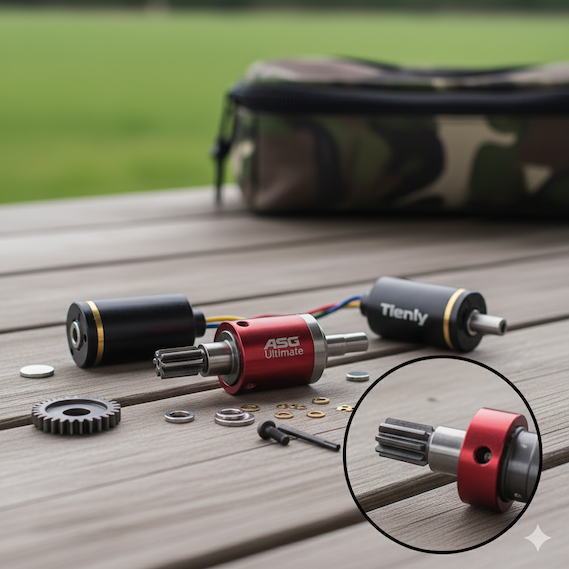
Motor characteristics directly influence trigger response, rate of fire, and battery efficiency. High-torque motors prioritise instant response and pulling power for heavy springs, whilst balanced options provide versatile performance across different configurations.
Magnet quality affects both power output and temperature resistance during sustained fire. Neodymium magnets provide superior magnetic field strength in compact packages, maintaining performance under thermal stress.
ASG Ultimate motors showcase precision engineering with their balanced armatures and advanced magnet configurations. The smooth power delivery eliminates motor whine whilst providing consistent performance across voltage ranges.
Tienly motors offer competition-grade performance with their precision-wound coils and balanced construction. The high-efficiency design maximises battery life whilst delivering instant throttle response essential for competitive applications.
Pinion gear compatibility ensures optimal mesh with sector gears for efficient power transfer. Quality steel pinions maintain tooth profiles under stress, preventing premature wear and timing issues.
Motor height adjustment capabilities allow precise gear mesh optimisation. Proper adjustment eliminates binding whilst maximising power transfer efficiency and component longevity.
Current draw characteristics determine battery selection requirements. High-torque motors may require higher discharge rate batteries to maintain optimal performance during sustained fire sequences.
Role-Specific Gun Selection Strategy
Matching airsoft rifle characteristics to tactical requirements and playing style maximises field effectiveness whilst optimising upgrade potential. Different roles demand specific performance characteristics that influence platform selection and configuration priorities.
CQB Optimised Configurations
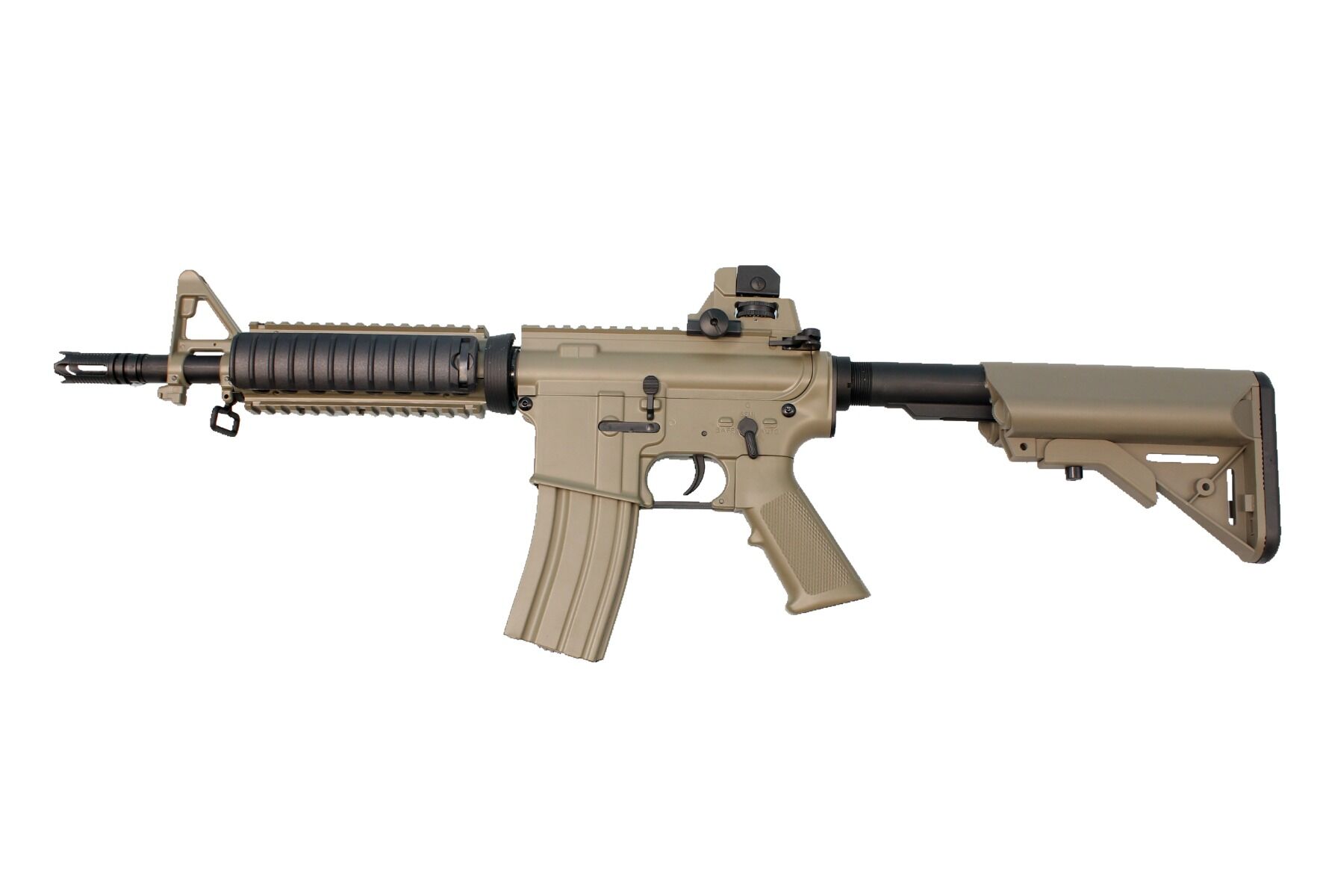 Double Bell M4 CQB - BUY NOW
Close-quarters battle environments prioritise manoeuvrability and instant trigger response over extreme range capabilities. Compact barrel lengths between 200-300mm provide adequate velocity whilst enabling rapid target transitions in confined spaces.
High rate of fire capabilities become essential for room clearing and suppressive fire applications. Configurations delivering 25+ RPS provide overwhelming firepower during breaches whilst maintaining controllable recoil characteristics.
Trigger response assumes critical importance in CQB engagements where milliseconds determine outcomes. HPA systems or MOSFET-equipped AEGs with precocking functionality provide competitive advantages in reaction-based scenarios.
Krytac PDW models excel in CQB applications with their 228mm barrels and compact form factors. The integrated MOSFET provides instant response whilst maintaining full-auto stability during rapid engagement sequences.
VFC Avalon Calibur configurations offer premium CQB performance with their quick-change spring systems and precision hop-up units. The robust construction handles aggressive use whilst providing consistent accuracy in close-range engagements.
Magazine capacity considerations balance weight against sustained fire capability. Mid-capacity magazines reduce bulk whilst forcing tactical reload procedures that enhance realism and training value.
Weight distribution becomes crucial for extended CQB operations. Properly balanced rifles reduce fatigue during room clearing sequences whilst maintaining target acquisition speed.
Designated Marksman and Sniper Platforms
Precision shooting roles require maximum accuracy and range capability through optimised barrel systems and stable hop-up configurations. Longer barrel lengths between 400-500mm maximise velocity whilst providing improved BB stabilisation.
Single-shot reliability becomes paramount for precision applications where follow-up shots may not be available. Consistent FPS output and predictable trajectory characteristics enable accurate range estimation and hold-over calculations.
Silverback platforms provide dedicated sniper rifle performance with their precision-engineered bolt action systems. The rigid construction maintains consistent zero whilst accommodating high-power springs for extended range capability.
Scope mounting systems must maintain zero under recoil forces whilst providing adequate adjustment range for various engagement distances. Quality rail systems with proper torque specifications ensure consistent point of impact.
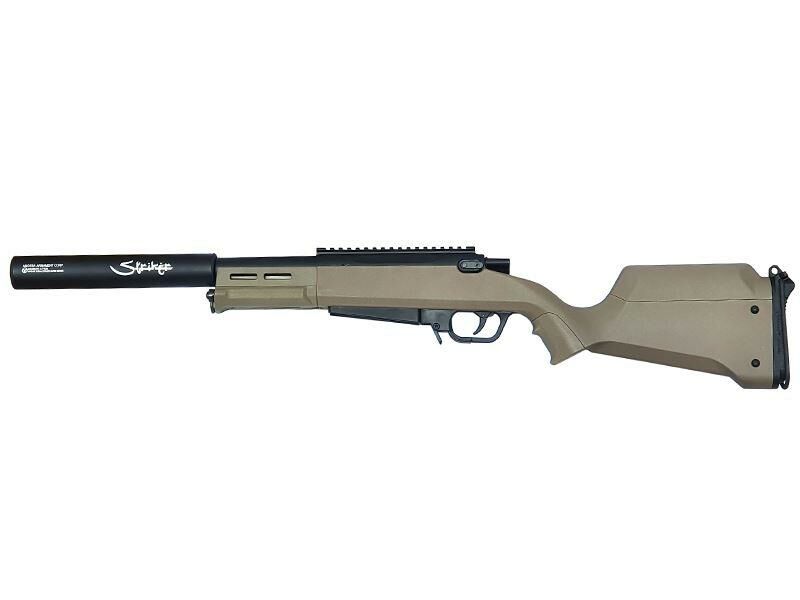 Ares x Amoeba Striker Knee Capper - BUY NOW
Ares Striker platforms offer modern sniper rifle ergonomics with their adjustable cheek rests and bipod integration points. The internal components handle upgraded springs whilst maintaining smooth bolt operation.
Hop-up stability under recoil forces affects precision during rapid follow-up shots. Quality chambers with positive locking mechanisms maintain consistent settings throughout extended engagements.
Barrel harmonics influence accuracy at extended ranges. Proper barrel tensioning and support systems minimise vibration-induced inconsistencies that affect precision shooting applications.
Support Gunner Heavy Weapons
Light machine gun roles demand sustained fire capability through high-capacity magazine systems and robust cooling configurations. Box magazines providing 2000+ round capacity enable suppressive fire missions without frequent reloads.
Thermal management becomes critical during sustained fire sequences. Quality barrels with adequate mass provide heat dissipation whilst maintaining accuracy throughout extended engagements.
A&K machine gun platforms provide authentic LMG experiences with their realistic weight distribution and belt-fed operation. The robust construction handles continuous operation whilst delivering authentic manual of arms training.
Classic Army support weapons offer modern manufacturing quality with improved internal components and reliable feeding systems. The upgraded hop-up chambers provide consistent accuracy during sustained fire missions.
Bipod integration and stability features enable accurate fire from various positions whilst reducing operator fatigue during extended deployments. Quality mounting systems accommodate different bipod types whilst maintaining zero retention.
Battery capacity requirements increase significantly for sustained fire applications. High-capacity LiPo packs provide extended operation whilst maintaining voltage stability under heavy current draw.
Feeding system reliability becomes paramount for sustained fire roles. Quality hop-up chambers and magazine compatibility ensure consistent BB feeding during extended engagement sequences.
Performance Optimisation Through Strategic Upgrades
Systematic upgrade approaches maximise performance improvements whilst maintaining reliability and compatibility. Understanding component interactions prevents costly mistakes and ensures optimal results from modification investments.
Primary System Upgrades
- Compression system improvements provide the foundation for all other performance enhancements. Perfect air seal between cylinder, piston, and nozzle maximises energy transfer efficiency whilst ensuring consistent FPS output.
- Spring selection balances power output with component stress. Progressive-rate springs provide smooth power delivery whilst maintaining consistent compression ratios throughout their operational life.
- Hop-up chamber and bucking upgrades deliver immediate accuracy improvements. Quality chambers with aftermarket buckings transform stock accuracy potential whilst providing stable settings for competitive applications.
- Motor upgrades enhance trigger response and battery efficiency. Balanced motors provide optimal performance across different configurations whilst high-torque options excel in demanding applications.
- Barrel upgrades represent the most cost-effective accuracy improvement. Quality inner barrels with proper bore dimensions and surface finish dramatically improve consistency and range capabilities.
- Electronic control systems revolutionise trigger response and firing characteristics. Advanced MOSFETs provide programmable functionality that adapts platform performance to specific tactical requirements.
Secondary Enhancement Priorities
- Gearing modifications optimise rate of fire and trigger response for specific applications. Custom ratios balance mechanical advantage with electrical efficiency for optimal performance characteristics.
- Compression component upgrades enhance air seal efficiency and durability. Quality pistons, cylinder heads, and nozzles maintain consistent performance throughout extended use.
- Power supply optimisation maximises electrical efficiency and operational duration. High-discharge LiPo batteries provide stable voltage delivery whilst maintaining compact form factors.
- Mechanical precision improvements reduce friction and enhance reliability. Quality bearings, precision shimming, and component alignment maximise efficiency whilst minimising wear.
- External modifications enhance ergonomics and tactical capability. Quality rails, stocks, and grip systems improve handling characteristics whilst providing mounting solutions for accessories.
- Maintenance system integration ensures long-term reliability. Quick-change components and accessible maintenance points enable field servicing without complete disassembly.
Conclusion
Superior field performance emerges from understanding platform strengths, evaluating internal quality, and selecting airsoft guns that match your tactical role and upgrade ambitions. The technical specifications we've analysed—from hop-up chamber compatibility to motor efficiency ratios—separate professional-grade platforms from recreational replicas.
Whether you choose the reliability and upgrade potential of a quality AEG, the instant response of an HPA system, or the authentic realism of a GBBR platform, success depends on matching technical capabilities to your specific requirements. Focus on internal component quality, future modification potential, and role-specific performance characteristics rather than brand recognition alone.
Your competitive advantage emerges from systematic evaluation of these technical elements combined with understanding how they integrate into complete systems optimised for your playing style and tactical requirements. The investment in quality platforms and strategic upgrades pays dividends through enhanced field performance and long-term reliability.
Remember that superior equipment provides the foundation, but tactical proficiency and teamwork determine ultimate success on the field. Choose wisely, upgrade strategically, and dominate through technical superiority combined with tactical excellence.
-
Why Golden Eagle's MK18 Platform Dominates UK Milsim: 7 Technical Advantages Most Players Miss
 November 13, 2025
 -
How Serious Airsoft Players Choose Performance-Ready Guns That Dominate Fields
 November 6, 2025
 -
Brand Spotlight: CYMA - From Budget Clones to Battlefield Legends
 October 16, 2025
 -
The Ultimate Guide: Our Top 3 M4 Airsoft Rifles at Bespoke Airsoft
 September 23, 2025
 -
The Marui Pantheon: An Expert Analysis of the Top 4 Tokyo Marui Replicas from Bespoke Airsoft
 July 8, 2025